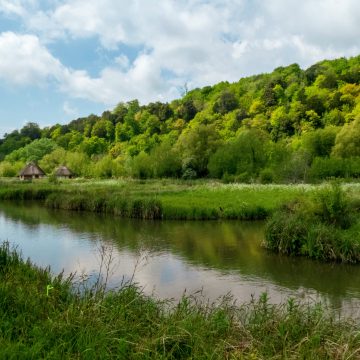
To protect Canada’s lands and waters, the Prime Minister, Mark Carney, has launched 'A Force of Nature: Canada’s Strategy to Protect Nature'. With an investment of C$3.8bn, Canada’s new nature strategy will protect and restore critical habitats, ensure industrial strategies complement our conservation efforts, and mobilise new capital for nature.
Category: Nature
EIC awards €118m to 30 breakthrough research projects
The European Innovation Council (EIC) has selected 30 new projects under the 2025 EIC Pathfinder Challenges Call for cutting edge research projects delivering breakthroughs in four strategic areas: biotech for climate resilient crops and plant-based biomanufacturing; generative-AI based agents to revolutionise medical diagnosis; robot collectives; and waste-to-value devices - circular production of renewable fuels, chemicals, and materials.
ADB surpasses $14bn food security commitment
The Asian Development Bank (ADB) has surpassed its $14bn commitment to strengthen food security in Asia and the Pacific during 2022–2025, while advancing a broader agenda to transform the region’s food systems through additional funding and expanded partnerships.
Europol: large-scale operation targeting waste and pollution crime
Europol has successfully coordinated a large-scale operation targeting organised crime networks involved in waste and pollution crime. The global operation, code-named ‘Custos Viridis’, took place between January and December 2025 on five continents, with Europol working alongside partners from 71 countries and numerous international organisations.
University of Graz develops computation method for climate extremes
How much heat, flooding, drought and storms increase as a result of human-induced climate change can be calculated, according to a study by Gottfried Kirchengast and his team at the University of Graz. It can compute all relevant hazard metrics in any region worldwide. The researchers found that anthropogenic climate change has caused a tenfold increase in extreme heat in recent decades.
IPBES: businesses can be positive agents of change
Every business depends on biodiversity, and every business impacts biodiversity. The growth of the global economy has been at the cost of immense biodiversity loss, which now poses a critical and pervasive systemic risk to the economy, financial stability and human wellbeing. This is a central finding of a report published by the Intergovernmental Platform on Biodiversity and Ecosystem Services (IPBES).
Millions in UK water company fines for waterway restoration
Water companies who broke environmental rules are now funding the recovery of England’s waterways, as local communities and environmental groups are being put in the driving seat to clean up rivers, lakes and seas. The UK Government is reinvesting £29m from water company fines into local projects which clean up the environment – funding over 100 projects which will improve 450km of rivers, restore 650 acres of natural habitats and plant 100,000 new trees.
Severe convective storms the costliest insured peril of this century
Severe convective storms (SCS) have surpassed tropical cyclones to become the costliest insured peril of the 21st century, according to Aon's annual Climate and Catastrophe Insight report. The report shows how increasingly common, high-volume events are reshaping global loss patterns and highlights the critical importance of both physical and financial resilience to help organisations manage volatility and unlock insurability.
Growth unlocked through enhanced sustainability data
The UK Sustainable Investment and Finance Association’s (UKSIF’s) institutional investor members were surveyed in November 2025 to gauge the investment community’s experience and use of sustainability data from investee companies and wider assets. Sustainability data – specifically the environmental, social, and governance (ESG) information that companies and assets disclose – is increasingly crucial for financial markets.
Researchers say global warming could trigger the next ice age
A missing feedback in earth’s carbon cycle could cause global warming to overshoot into an ice age, say researchers at University of California - Riverside. As the planet warms, nutrient-rich runoff fuels plankton blooms that bury huge amounts of carbon in the ocean. In low-oxygen conditions, this process can spiral out of control, cooling earth far beyond its original state. While this won’t save us from modern climate change, it may explain earth’s most extreme ancient ice ages.
New funds to unlock millions for frontline environmental action
A new package of $67m has been approved by the Global Environment Facility to help nations take frontline action on biodiversity loss, pollution and a rapidly warming planet. With UNDP’s support, the funding will be channelled to nine projects targeting some of the world’s most fragile ecosystems and climate-vulnerable communities in Africa, Asia-Pacific, Latin America and the Middle East and North Africa.
New regional hub to strengthen climate action in Hindu Kush
The United Nations Framework Convention on Climate Change and the International Centre for Integrated Mountain Development (ICIMOD) has launched the Hindu Kush Himalaya Regional Climate Action Transparency Hub. The launch builds on a three-year memorandum of understanding, establishing a dedicated platform for ICIMOD’s eight Regional Member Countries – Afghanistan, Bangladesh, Bhutan, China, India, Nepal, Myanmar and Pakistan. The hub aims to provide sustained capacity building and promote data and experience sharing across the region.
Analysis: humans are built for nature not modern life
Human biology evolved for a world of movement, nature, and short bursts of stress, not the constant pressure of modern life. Industrial environments overstimulate our stress systems and erode both health and reproduction. Analysis from the University of Zurich and Loughborough University says that evidence shows the toll of this mismatch.
UK Government acts to secure future of water industry workforce
A new group has been convened by the UK Government to ensure the UK has the skilled workforce it needs to deliver record levels of investment and reform. The Water Skills Strategic Group brings together senior leaders in government from and across the water sector and its supply chain. The group’s focus will be the delivery of the £104 billion investment – the largest since privatisation – which will create more than 30,000 new jobs, support the building of 1.5m new homes, and help restore the nation’s rivers, lakes and seas.
The surprising psychology of dietary choices
Food systems are a major contributor to environmental impacts, such as greenhouse gas emissions and biodiversity loss, with widespread dietary changes required to avoid surpassing safe planetary boundaries by 2050. A study published in Elsevier’s Journal of Cleaner Production analyses the dimensions underlying public perceptions and misperceptions of food's environmental impact.