The Taskforce on Inequality and Social-related Financial Disclosures (TISFD) has released the first draft version of its framework, marking an important milestone in efforts to improve how businesses and financial institutions understand and report impacts, dependencies, risks and opportunities related to people.
Category: Regulation
New coalition to set sustainability standards for AI data centres
Clear, credible benchmarks for sustainable data centre are being developed through the Greening AI Data Centres Coalition (GADCC). The coalition brings together nine of the world’s leading built environment, sustainability and finance organisations in response to the rapid global growth of AI-driven data centres and the increasing pressures these facilities place on energy systems and networks, water resources and local communities.
Action on aerospace is part of the Commission’s Accelerate EU
Because the conflict in the Middle East is heavily impacting global energy markets, with a knock-on effect on the economy, industry and households, the Commission is taking specific action with notable measures in relation to the transport sector. To ensure sufficient availability of transport fuels and preserve the effective functioning of the single market, the Commission will step up European coordination on the optimisation of fuel distribution across Member States.
Council signs off simplification of sustainability reporting and due diligence
The European Council has approved the simplification of the sustainability reporting and due diligence requirements for companies. This legislation simplifies the directives on corporate sustainability reporting (CSRD) and corporate sustainability due diligence (CS3D) by reducing the reporting burden and limiting the trickle-down effect of obligations on smaller companies.
UK Government issues UK Sustainability Reporting Standards
The UK Department for Business & Trade has issued UK Sustainability Reporting Standards: UK SRS S1 and UK SRS S2. UK SRS have been created by assessing and endorsing the global corporate reporting baseline of IFRS Sustainability Disclosure Standards.
More decisive reform needed to secure UK leadership in finance
TheCityUK and PwC UK have published a report setting out the actions needed for the UK to lead in the next era of global finance. The report, ‘No time to lose: Reasserting UK leadership in financial and related professional services’, draws on engagement with over 300 senior leaders across industry, government, regulators and academia – and is underpinned by new economic modelling and international benchmarking from PwC.
Commission takes measures to transition Europe to a circular economy
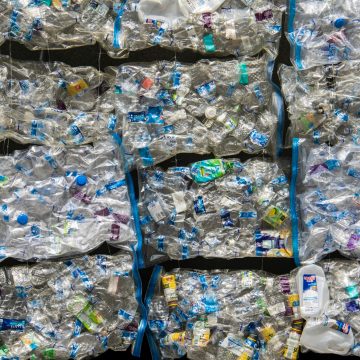
The European Commission has unveiled a first set of pilot actions to accelerate Europe's transition to a circular economy, with a particular focus on the plastics sector. The Commission says that by optimising the recycling of plastics, these measures will further unlock the potential of the Single Market and enhance the EU's economic security, strategic autonomy, competitiveness and environmental sustainability.
Carbon Border Adjustment Mechanism (CBAM) goes live on 1 January 2026
Those importing more than 50 tonnes of cement, iron and steel, aluminium, fertiliser, as well as all importers of electricity or hydrogen, need to have submitted an application for a CBAM account number or a CBAM application
reference number under the EU CBAM (or received an authorisation at the time of import). Importers who have not already submitted applications need to act fast now to avoid risking disruptions, delays or penalties. Applications must be submitted prior to import and at the latest by 31 March 2026 for all concerned import companies.
European Council urges accelerated transition by 2030
The European Council has approved conclusions on 'Europe's Environment 2030 – Building a more climate resilient and circular Europe'. The conclusions stress the urgent need to accelerate action to meet the EU’s long-term environmental and climate goals, particularly the six 2030 priority objectives of the 8th Environment Action Programme (EAP).
Deal reached on updated EU sustainability reporting and due diligence
Legal Affairs Committee MEPs and the European Council have agreed to reduce sustainability reporting and due diligence requirements for companies, a proposal that forms part of the so-called Omnibus I package. According to the informal agreement, social and environmental reporting will only be required for EU companies employing on average over 1,000 employees and with a net annual turnover of over €450m. The net turnover threshold has also been increased for non-EU companies to €450m generated in the EU for sustainability reporting.
Political agreement reached on amendment to the EU Climate Law
Negotiators from the European Parliament and Council have reached a provisional political agreement on an amendment to the EU Climate Law, setting a new, intermediate and binding 2040 EU climate target of reducing net greenhouse gas (GHG) emissions by 90% compared to 1990 levels.
ISSB issues targeted amendments to IFRS S2
The International Sustainability Standards Board (ISSB) has issued targeted amendments to greenhouse gas (GHG) emissions disclosure requirements in IFRS S2 Climate-related Disclosures in response to specific application challenges that were identified as companies started to apply the Standard.
MEPs back simplification changes to sustainability reporting
The EU Parliament has endorsed reduced reporting duties and due diligence requirements for companies. With 382 votes in favour, 249 against and with 13 abstentions, Parliament has adopted its negotiating position on simplified sustainability reporting and due diligence duties for businesses.
FRC issues standard on the assurance of sustainability reporting
The Financial Reporting Council (FRC) has issued International Standard on Sustainability Assurance (UK) 5000, “General Requirements for Sustainability Assurance Engagements”, which provides UK companies, investors and assurance providers with a consistent, internationally aligned assurance standards for voluntary use in sustainability assurance engagements.
New framework to measure, manage and communicate circularity
The Global Circularity Protocol for Business (GCP) has been launched to accelerate the transition to a circular economy by providing a global framework for measuring, managing and communicating an organisation’s circular performance and its impacts. Developed by the World Business Council for Sustainable Development (WBCSD) in collaboration with the UNEP-hosted One Planet Network (OPN), the GCP enables organisations to embed circularity at the heart of strategy and operations.