Global biodiversity is declining at unprecedented rates. ISO 17298 provides a practical framework to help organisations of all types and sizes understand how they depend on and impact nature – and take concrete action to address it. Developed by ISO’s expert committee on biodiversity (ISO/TC 331), this is the first International Standard that guides organisations in embedding biodiversity into their core strategies, operations and decision-making processes.


Category: Nature
Post
Poll: upholding by EU of its own environmental laws important
New online polling conducted across 10 European countries reveals that 75% of respondents rate the upholding by the European Union (EU) of its own environmental laws within EU member states as important (38% selected “very important”, 37% selected “fairly important”).
Post
António Guterres welcomes the BBNJ Agreement
As the Agreement on Marine Biological Diversity of Areas beyond National Jurisdiction – the BBNJ Agreement – reached the required threshold of ratifications for entry into force, UN Secretary-General António Guterres welcomed this historic achievement for the ocean and for multilateralism.
Post
UK introduces landmark legislation to protect ocean
The UK government has introduced a landmark bill to protect two-thirds of the world’s ocean, a key source of food and oxygen for people in the UK and all over the world. This marks a major step forward in global efforts to protect marine life and ecosystems beyond national borders.
Post
Eunomia: full subsidy removal would reduce polymer production
Eunomia’s latest report demonstrates that full subsidy removal would lead to substantial reductions in polymer production, particularly in economies with high subsidy levels. Meanwhile, the impact on consumer prices would be minimal. For fast-moving consumer goods such as bottled water, the average price increase is estimated between just 0.14% and 0.90%.
Post
PIK and BOKU: 60% of the world’s land area is in a precarious state
A study by the Potsdam Institute for Climate Impact Research (PIK) and BOKU University in Vienna maps the planetary boundary of “functional biosphere integrity” in spatial detail and over centuries. It finds that 60% of global land areas are now already outside the locally defined safe zone, and 38% are even in the high-risk zone. The study was published in the renowned journal ‘One Earth’.
Post
An eco-environment monitoring network for sustainable governance
Dawei Zhang has published a paper on China’s three-dimensional monitoring system that covers air, water, terrestrial and marine environments. This outlook first reviews the achievements of China's eco-environmental monitoring network and ongoing technological advancements, then discusses the implications of China's experience for global environmental governance, and finally offers conclusions and recommendations for international collaboration.
Post
Chestnut Carbon: financing for US afforestation in the voluntary carbon market
Chestnut Carbon, a nature-based carbon removal developer, has announced the successful closing of a landmark non-recourse project finance credit facility of up to $210m – a first-of-its-kind bank financing for a US voluntary carbon removal afforestation project.
Post
$2.5m for blue carbon project in Sierra Leone
FSD Africa Investments (FSDAi) is investing $2.5m in West Africa Blue’s blue carbon project in Sierra Leone’s Sherbro River Estuary. FSDAi’s investment will contribute to the conservation and restoration of approximately 94,000 hectares of mangrove ecosystems across 11 chiefdoms.
Post
11 UK peatlands to become New National Nature Reserve
A network of 11 nature-abundant lowland peat sites, between Liverpool and Manchester, are to become a King’s Series National Nature Reserve. These sites, from lowland raised bogs and fen, through to lowland heath, wet woodland and drier woodland habitats, will be restored to provide homes for rare species, such as lapwings, curlew, sundew and adders.
Post
UK air quality: better but not good enough
UK air pollution improved between 2015 and 2024, but is still dangerous too often, research from the University of Reading says in ‘Environmental Science: Atmospheres’. Scientists from the University studied pollution at more than 500 monitoring sites around the UK. They found that two types of pollution got better over the decade: nitrogen dioxide (NO2), which is mainly produced by traffic, fell by 35% on average at monitoring sites; and fine particles called PM2.5, which are small enough to get deep into lungs, dropped by 30%.
Post
UN Conference: oceans are essential to mitigating climate change
The third United Nations Ocean Conference has adopted a political declaration entitled: “Our ocean, our future: united for urgent action”, stressing that the ocean plays an essential role in mitigating the adverse effects of climate change.

Post
Wilful blindness: turning a blind eye to planetary insolvency
The global economy could face a 50% loss in GDP between 2070 and 2090 unless immediate policy action on risks posed by the climate crisis is taken. This is the stark warning set out in ‘Planetary Solvency – finding our balance with nature’ by the Institute and Faculty of Actuaries (IFoA) in collaboration with climate scientists.
Post
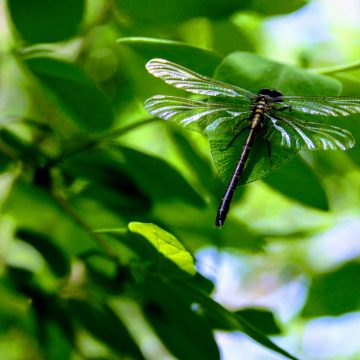
A bug’s life – and death – tells our sad nature story
The jury is out on whether the old adage ‘you can manage what you can measure’ will come up trumps for Britain’s bug life; but a scheme for measuring the bug population is making citizen scientists of many people in the UK, and proving a valuable entry point for them to understand the catastrophic impact of nature loss.
Post
Uzbekistan to modernise irrigation infra with World Bank support
The World Bank has approved a $200m concessional credit to support Uzbekistan in modernising its irrigation and drainage infrastructure and improving the quality of irrigation service delivery. The project aims to reduce water losses and increase the energy efficiency of irrigation systems across five regions of the country. The Government of Uzbekistan will provide $23.2m in co-financing.